Wondering if you should list now or wait for a better moment? If you are thinking about selling in Harrisonburg, timing can feel like a moving target, especially in a market that is no longer at its pandemic-era peak but still remains active. The good news is that you do not need to guess. With the right local data and a solid prep plan, you can choose a timing strategy that fits your home, your goals, and the current market. Let’s dive in.
Harrisonburg’s Market Is Shifting, Not Stalling
If you have been hearing mixed messages about the market, that makes sense. Harrisonburg is not in the same fast-paced environment it saw a few years ago, but it is still a market where well-positioned homes can attract strong interest.
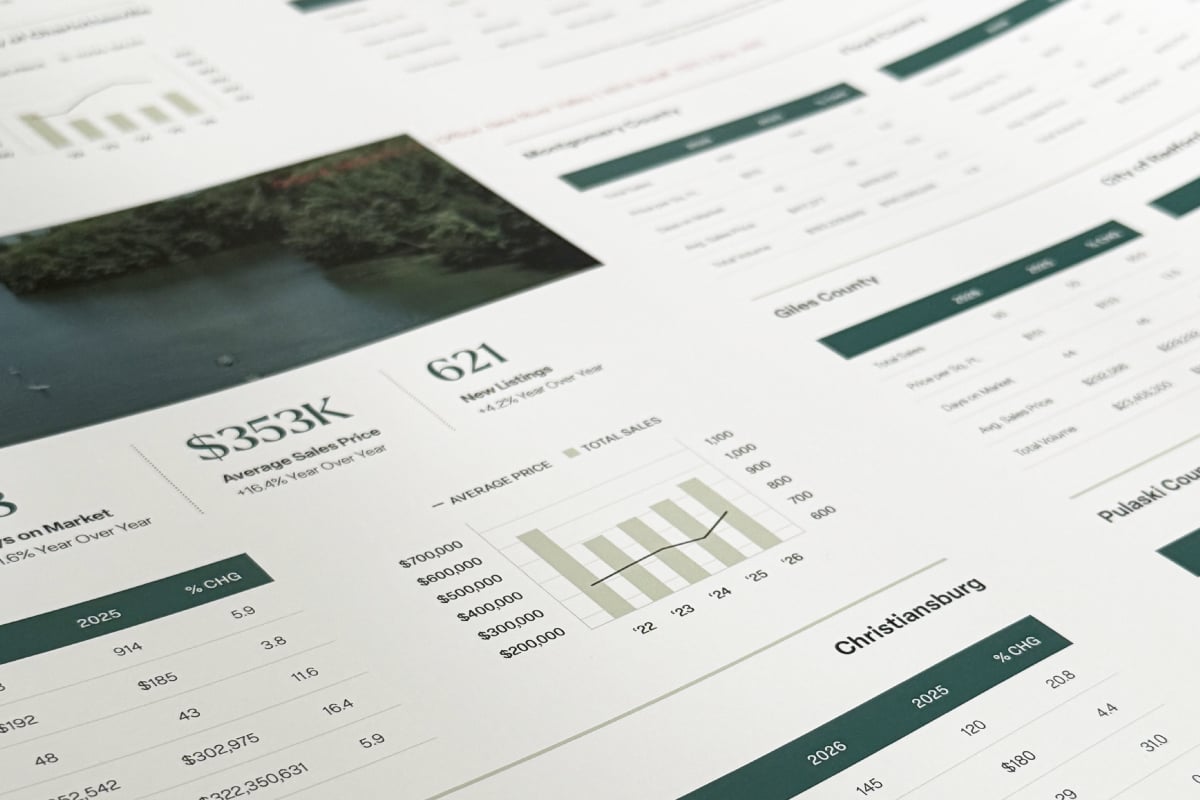
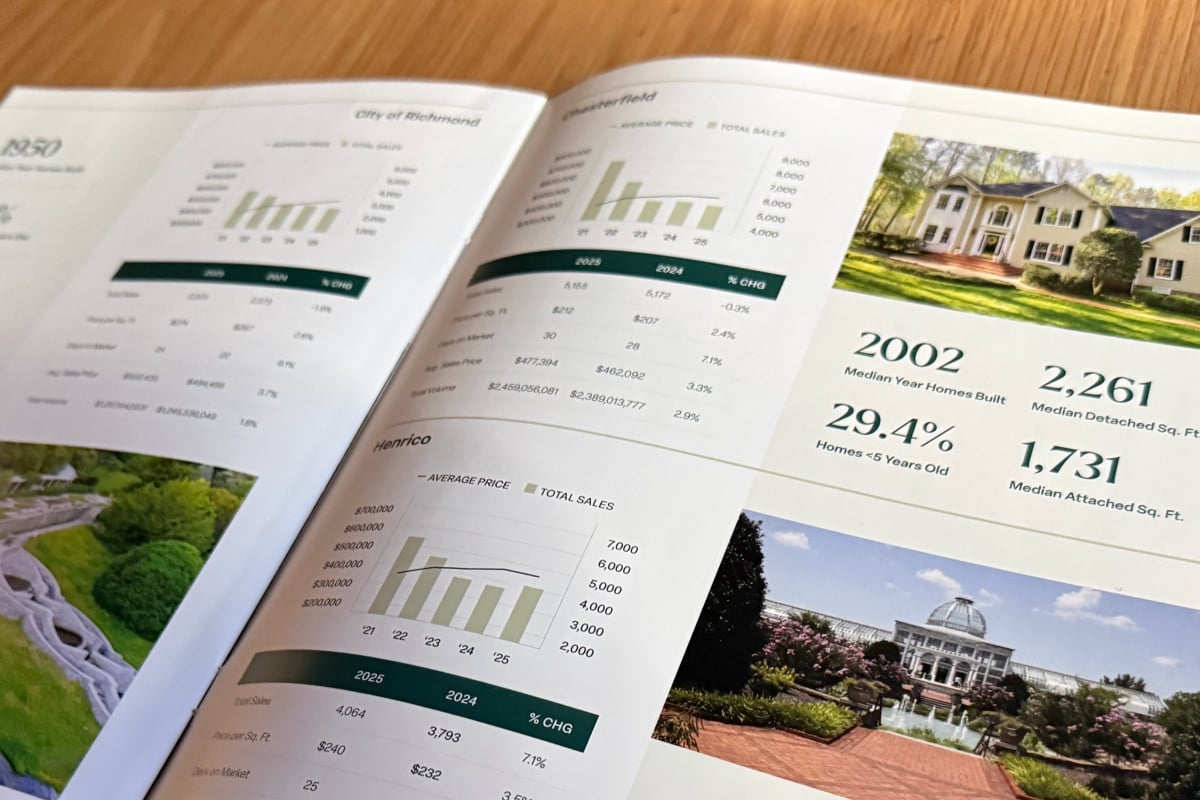
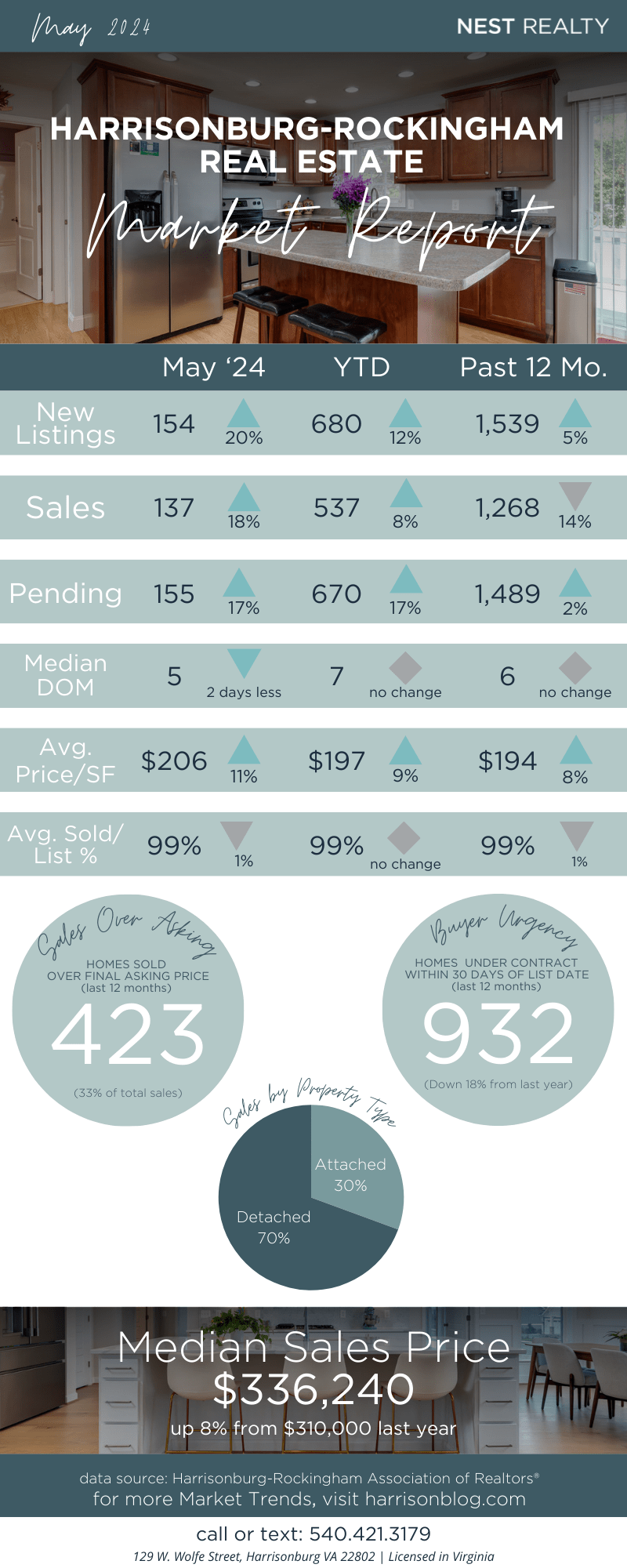
According to Nest Realty’s 2025 annual report, the City of Harrisonburg had 1,042 sales in 2025, which was down 2.0% from 2024. At the same time, the average sales price rose 1.1% to $406,309, and median days on market increased from 7 to 9. That points to a market with a bit more breathing room, not one that has lost momentum.
Nest’s local commentary described 2025 as a steadily balancing market with more inventory and stable rates. It also noted that detached homes inside the city and some county communities continued to draw strong interest, while listings that were less updated or less competitive often took longer to sell.
A March 2026 snapshot from Realtor.com also showed Harrisonburg as a seller’s market, with 86 active for-sale listings, a median listing price of $329,950, a sale-to-list ratio of 100%, and a median 32 days on market. It helps to treat that as one portal’s current monthly reading, not a permanent label for the market.
Why Timing Matters More Now
In a frenzied market, almost any reasonably priced home could get attention quickly. In a more balanced market, timing works best when it supports your pricing, presentation, and competition strategy.
That is why the smartest way to think about timing is not chasing one magical week on the calendar. It is watching the local signals that affect buyer behavior and deciding when your home will be most ready to compete.
The most useful signs to watch are:
- Inventory, or how many homes are on the market
- Days on market, which shows how quickly homes are moving
- Sale-to-list ratio, which helps show how much pricing power sellers have
When supply rises and days on market stretch, buyers usually gain more leverage. When inventory stays tighter and homes still sell close to asking price, sellers often have more room to be selective.
Spring Often Leads, But It Is Not Automatic
If you want the short answer, spring and early summer are often strong times to sell in Harrisonburg. But that does not mean spring is always best for every home or every seller.
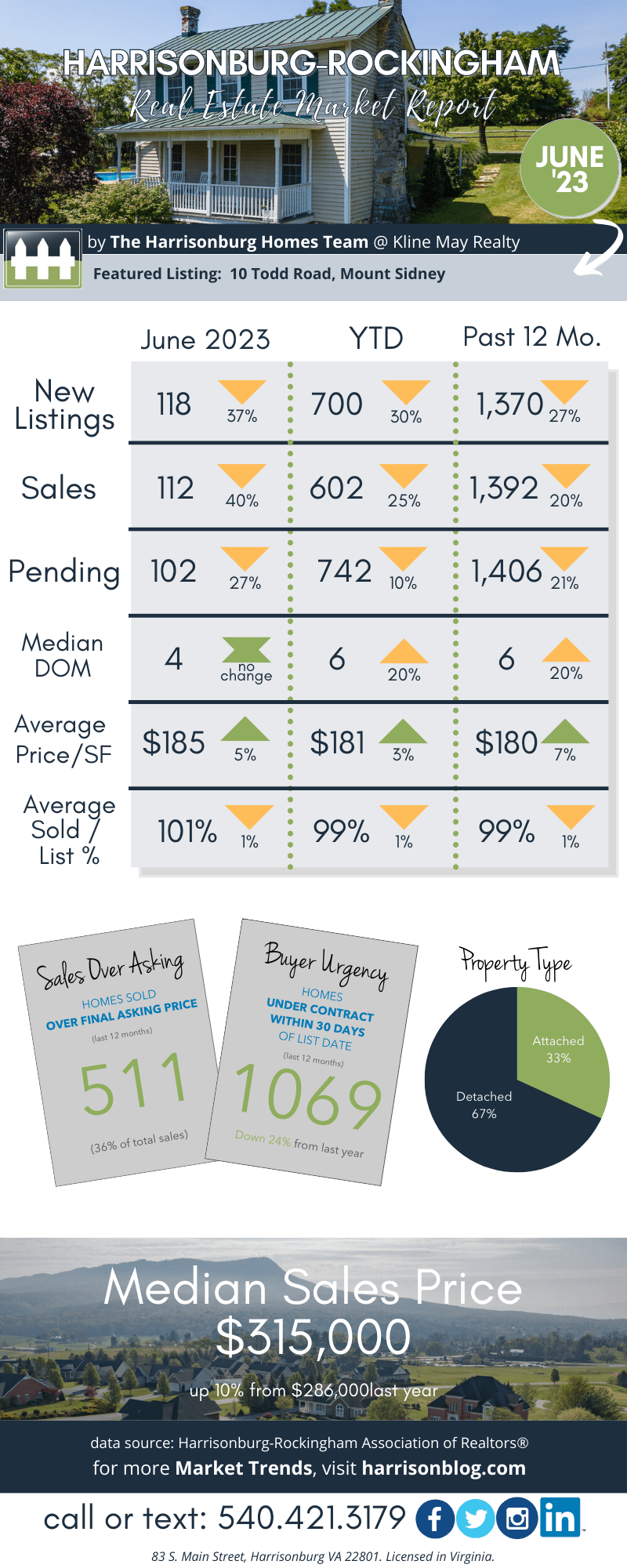
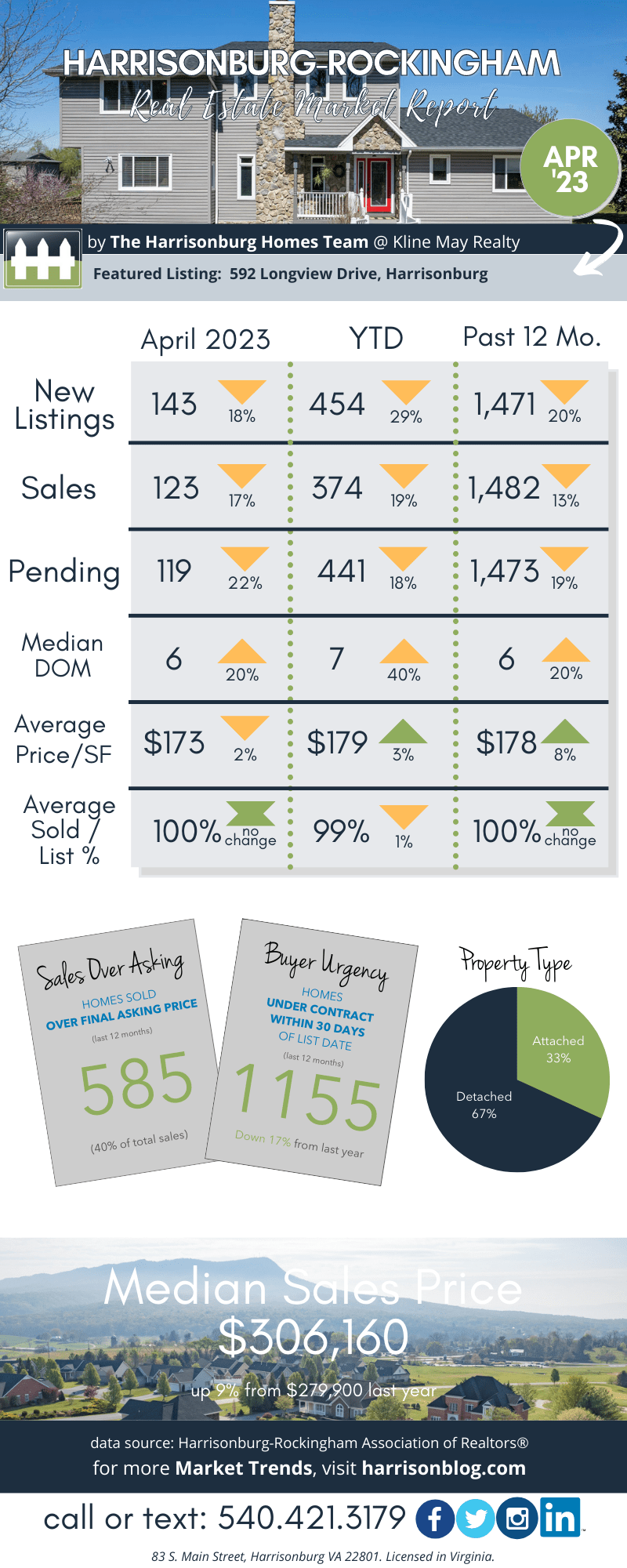
The clearest local seasonal pattern comes from the Harrisonburg-Rockingham Association of Realtors second-quarter 2025 report. In Harrisonburg city, activity increased in April, dipped in May, and rose again in June. During Q2 2025, the city recorded 66 sales, a median sales price of $301,250, and a median 5 days on market.
That same report also showed 39 active listings in the city at the end of the quarter, which was 11 more than the year before. More inventory can create more competition, even during a season when buyer activity is strong.
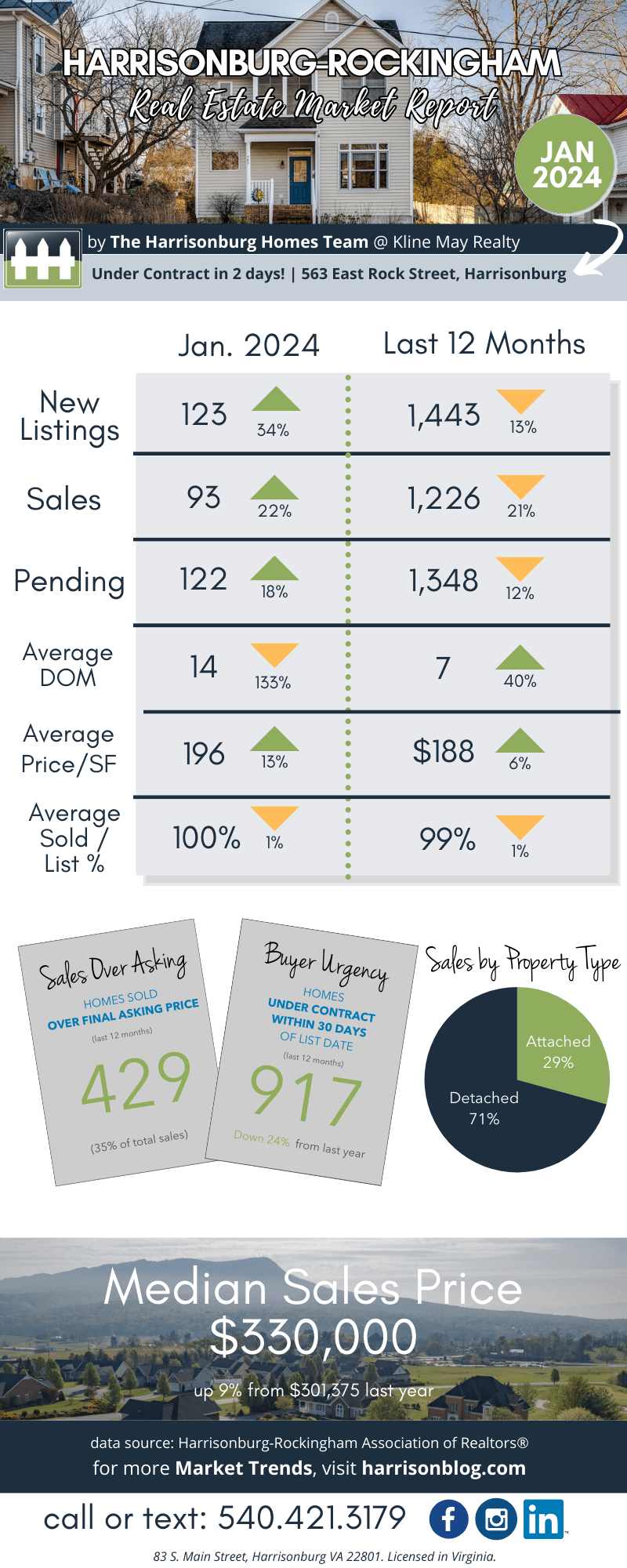
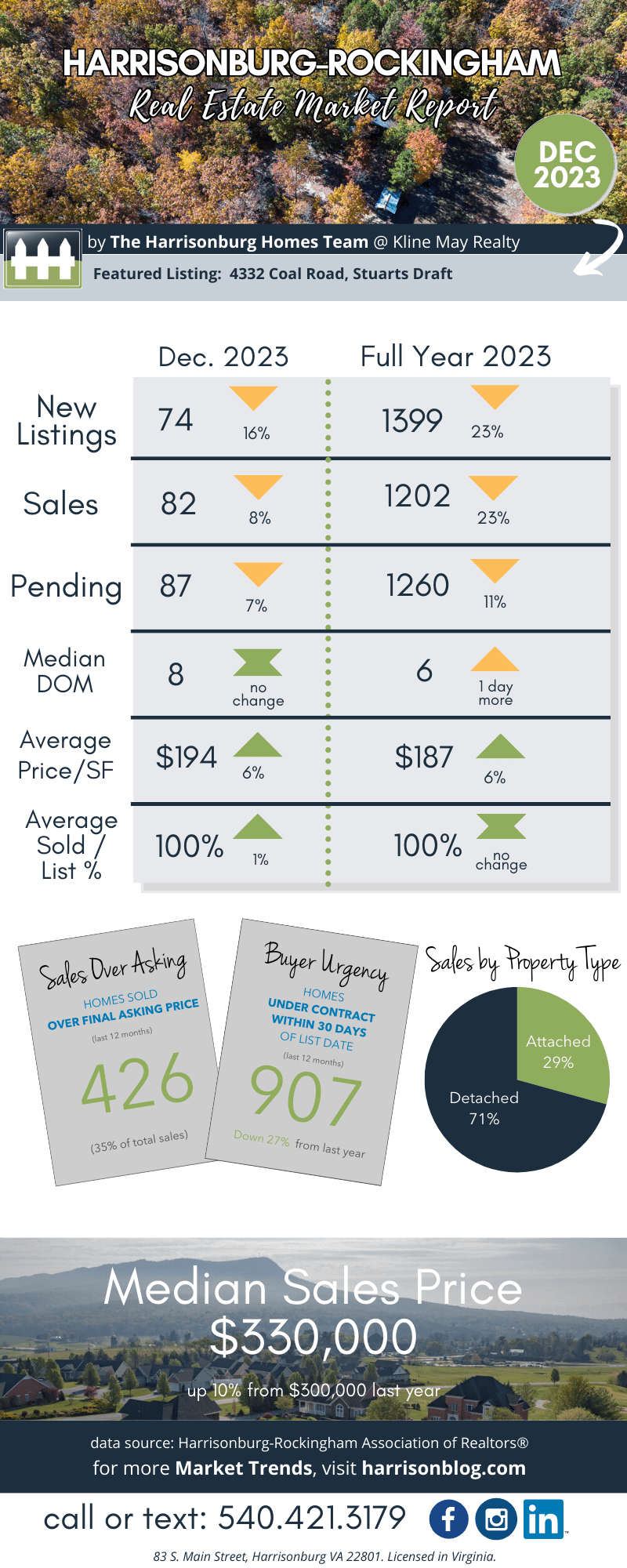
By contrast, late fall and winter tend to move more slowly. HRAR’s fourth-quarter 2023 report described the region’s slowest fourth quarter in more than a decade. In Harrisonburg city, there were 55 closed sales, a median sales price of $295,000, 18 days on market, and 32 active listings.
National seasonality research points in the same general direction. Different sources place the exact peak at slightly different times, but both Realtor.com and Zillow identify spring as the classic selling season, while Zillow notes that sales often begin to slow in September and winter is usually the slowest season.
What Local Sellers Should Watch
The right time to list depends less on the month alone and more on what the market is doing when you are ready. In Harrisonburg, quarter-to-quarter shifts can change how much leverage you have.
Watch Inventory Levels
Inventory tells you how much competition buyers will see. If more similar homes come on the market at the same time, pricing and presentation matter even more.
The broader HRAR footprint ended Q2 2025 with 279 active listings and 2.6 months of supply. That is still a relatively lean market by historical standards, but it also shows that choices were increasing.
Watch Days on Market
Days on market can help you tell whether buyers are moving quickly or taking more time. A median of 5 days on market in Harrisonburg city during Q2 2025 looks very different from the city’s 18 days on market in Q4 2023.
That does not mean every home will sell in a week in spring or sit for weeks in winter. It does mean your launch strategy should reflect current conditions, not old assumptions.
Watch Sale-to-List Trends
A sale-to-list ratio near 100% suggests sellers are still capturing close to their asking price. The March 2026 Realtor.com snapshot showed that kind of balance in Harrisonburg.
If that ratio starts slipping while inventory grows and homes take longer to sell, it may be a sign buyers are gaining negotiating power. That is when overpricing tends to cost sellers the most.
Your Home Type Changes the Answer
One of the biggest mistakes sellers make is assuming a citywide trend applies to every property in the same way. In Harrisonburg, property type and location can create very different outcomes.
Nest’s 2025 mid-year report noted that there are hot and cooler pockets within the city. It also pointed to differences tied to neighborhood, new construction, and whether a home is attached or detached.
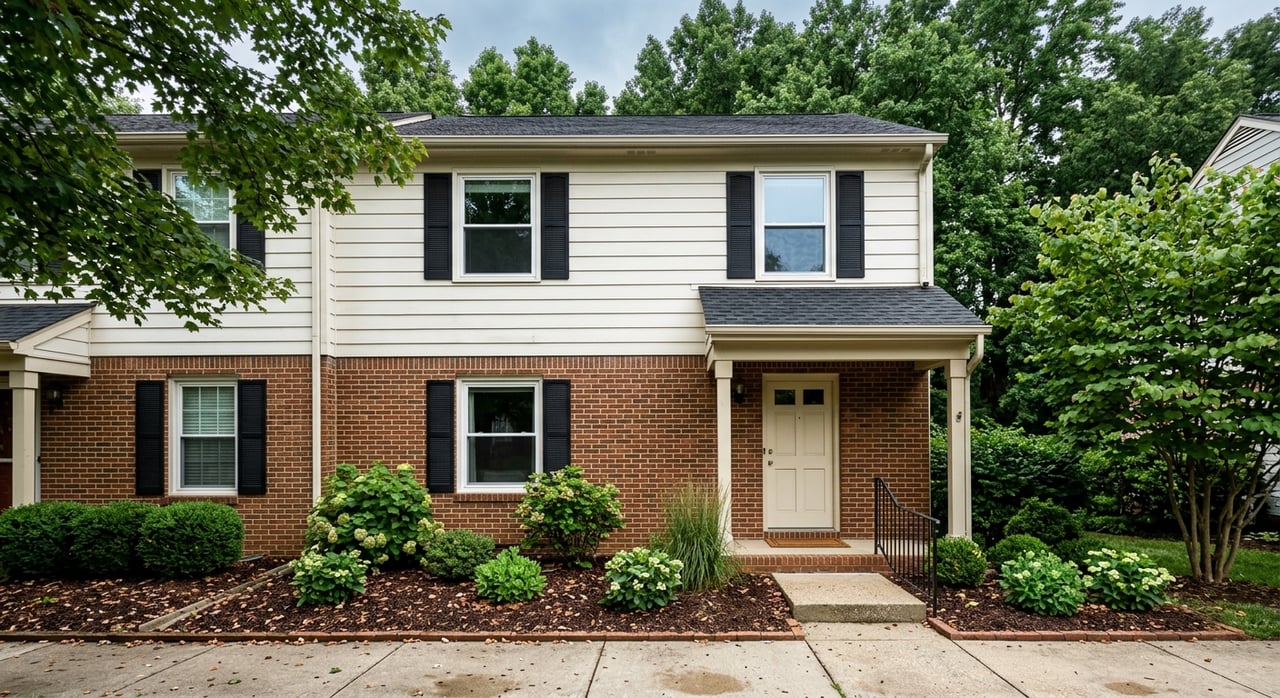
That matters because a detached home in one area may see strong demand even in a more balanced market, while a townhome, condo, or less-updated listing may need sharper pricing and more thoughtful preparation. A one-size-fits-all list date is simply less reliable than a home-specific strategy.
Market-Ready Beats Calendar-Ready
If you have flexibility, aiming for spring or early summer can make sense. But only do that if your home is truly ready.
A rushed launch can undercut the very seasonal advantage you hoped to gain. Buyers notice condition, presentation, and pricing immediately, especially when inventory is growing.
Zillow’s guidance suggests many sellers spend 3 to 4 months thinking about selling before they actually list. That timeline makes sense in Harrisonburg too, especially if you need time for repairs, staging, decluttering, or contractor scheduling.
A practical prep window often includes:
- Assessing your home with a clear eye for deferred maintenance
- Prioritizing repairs that affect first impressions or buyer confidence
- Decluttering and simplifying rooms so buyers can focus on space
- Making a plan for staging or styling guidance
- Reviewing current competing listings and recent local activity
- Building a pricing strategy around inventory, days on market, and recent sales
This is where strong seller preparation can make a real difference. A thoughtful plan around repairs, presentation, and pricing usually matters more than trying to hit one exact week on the calendar.
A Smart Launch Plan for Harrisonburg Sellers
If you want to improve your timing, focus on both season and execution. Here is a practical framework.
Start Planning Early
If you hope to list in spring or early summer, begin preparing 3 to 4 months ahead. That gives you more room to make decisions calmly and avoid last-minute compromises.
It also helps if your move involves a second transaction. Selling and buying at the same time usually works better when your timeline is built in advance rather than improvised.
Review Current Competition
Do not rely only on annual averages. Harrisonburg’s quarter-by-quarter data show that spring, late summer, and year-end can feel quite different.
Look closely at homes that would compete with yours in price, size, condition, and property type. That will tell you more than a broad citywide headline.
Price for the Market You Have
This step matters in every season, but especially in a shifting one. Pricing should reflect current competition and buyer behavior, not just your ideal outcome.
It is also important to keep pricing metrics straight. Nest’s annual report uses average sales price, while HRAR’s quarterly report uses median sales price, so those figures should not be compared as if they measure the same thing.
Consider a Thursday Launch
If your home is ready and your schedule allows, a Thursday listing can be a useful tactic. Zillow says Thursday has historically been a strong day to list because it captures weekend traffic without getting buried in the Friday rush.
That is not a guarantee, but it is a practical choice many sellers can consider as part of a larger launch plan.
What If You Need to Buy Too?
For many Harrisonburg sellers, timing is not just about the sale. It is also about where you are going next.
If you need to buy another home after selling, the best timing is often the one that reduces stress and protects your options. That may mean starting earlier than you think, getting a realistic view of your likely sale timeline, and planning around how long a purchase may take.
Zillow says the typical U.S. sale takes about 47 to 62 days from list to close once a home goes live. Your timeline in Harrisonburg may vary, but that estimate is a helpful reminder that even a quick contract does not mean an instant move.
When you are coordinating two moves, clarity matters. A local, data-based plan can help you weigh prep time, listing strategy, likely market response, and your next-home search in one connected timeline.
The Best Time Is When Preparation Meets Opportunity
If you are waiting for a perfect week to sell, you may miss the bigger point. In Harrisonburg, the best results often come when your home is fully prepared, priced with discipline, and launched into the market with a strategy shaped by current local conditions.
Spring and early summer may offer a helpful tailwind. But in a shifting market, readiness, presentation, and local analysis are what turn timing into results.
If you are thinking about selling in Harrisonburg city, a home-specific plan can help you decide whether to move now, prep for spring, or wait for a better-fit window. The team at Nest Realty Harrisonburg can help you evaluate the market, build a smart prep strategy, and time your sale with confidence.
FAQs
Is spring always the best time to sell a home in Harrisonburg?
- Not always. Spring and early summer often bring strong activity, but the best timing depends on your home’s condition, price range, property type, and current competition.
What signs show the Harrisonburg market is getting softer for sellers?
- Rising inventory, longer days on market, and a lower sale-to-list ratio can all suggest buyers are gaining more leverage.
How much preparation should I do before listing a Harrisonburg home?
- As much as needed to make the home market-ready. Many sellers benefit from starting 3 to 4 months early so they can handle repairs, decluttering, staging, and pricing strategy without rushing.
Does timing differ for detached homes, townhomes, and new construction in Harrisonburg?
- Yes. Nest’s local reporting shows that neighborhood, new construction, and attached-versus-detached differences can all affect demand and timing.
What should I do if I need to sell my Harrisonburg home and buy another one?
- Start planning early and treat both moves as one timeline. A clear local strategy can help you balance prep time, sale timing, and your next purchase more smoothly.